Cozy Cabled Crochet Dog Sweater: Free Step-by-Step Pattern
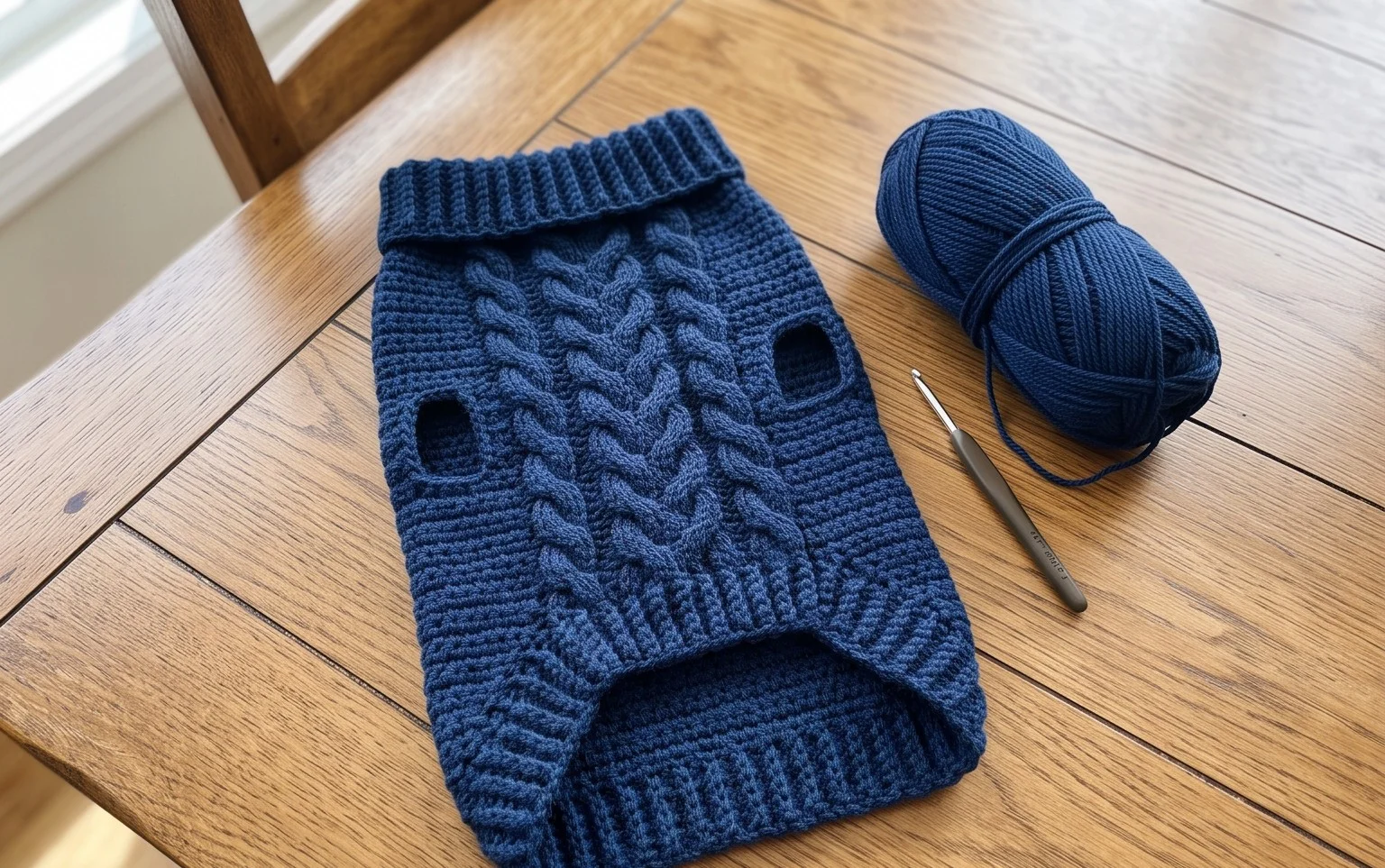
A warm, wool-blend sweater keeps your dog comfortable during chilly morning walks and provides a cozy layer of protection against the frost. This project results in a soft, squishy fabric with classic braided lines that hug your pet’s frame without restricting their natural movement. Beginners often enjoy this pattern because it simplifies the front-post stitch technique into a repeating sequence that builds quickly. You will learn how to create crisp, defined lines through basic post work that adds professional depth to your handcrafted gear. It is a rewarding way to spend a quiet weekend afternoon indoors.
Why You’ll Love This Pattern
This classic crochet dishcloth works up quickly using the simple textured Moss Stitch, making it an ideal project for practicing consistency and tension. The density created by alternating single crochet and chain stitches results in a durable, absorbent fabric that holds up well under daily use in the kitchen. Because it uses less than one skein of standard cotton yarn, it is a highly budget-friendly way to refresh your home linens or prepare a last-minute gift for friends. The rhythmic nature of the stitch pattern requires very little counting once the foundation is set, allowing you to relax while you work on your next household essential.
I finished this dishcloth in one evening while watching a movie. The texture is much thicker than store-bought options and it cleans my cast iron pans perfectly.
— Sarah, home enthusiast
Pattern Overview & Skill Level
- Skill Level: Beginner
- Approximate Time: 1 to 2 hours
- Construction: Worked in rows from the bottom up
- Finished Dimensions & Sizing: 8 inches by 8 inches
Materials & Supplies Needed
- Yarn: Worsted weight (#4) 100% cotton yarn, approximately 75 yards.
- Hook Size: 5.0 mm (US H-8).
- Notions: Tapestry needle for weaving in ends, scissors, and a locking stitch marker if desired to track row ends.
- Safe yarn substitutions: You may use a cotton-acrylic blend for a softer feel, though this will slightly reduce the absorbency of the cloth compared to pure cotton.
Stitch Guide & Abbreviations (US Terms)
- ch: chain
- sc: single crochet
- st(s): stitch(es)
- sk: skip
- Moss Stitch: A pattern created by working [1 sc, ch 1, sk 1 st] across the row.
Step-by-Step Pattern Instructions
Main Cloth Body
- Foundation: Ch 32.
- Row 1: Sc in 4th ch from hook, *ch 1, sk 1 ch, sc in next ch; repeat from * across until end of row, turn. (15 sc, 15 ch-1 spaces).
- Row 2: Ch 2 (counts as ch 1), sk first sc, sc in first ch-1 space, *ch 1, sk next sc, sc in next ch-1 space; repeat from * across, finishing with an sc in the turning chain space, turn. (15 sc, 15 ch-1 spaces).
- Rows 3-30: Repeat Row 2 until the piece measures approximately 8 inches from the starting edge.
- Finishing: Fasten off yarn, leaving a 6-inch tail. Weave the end securely back through the stitches using your tapestry needle to prevent unraveling during washing.
Border (Optional)
For a clean edge, join yarn in any corner, ch 1, and work sc evenly around the perimeter of the cloth, placing 3 sc in each corner to allow the piece to lay flat. Slip stitch to the first sc and fasten off.
Care & Washing Instructions
- Machine wash in warm water on a gentle cycle to preserve the fiber structure.
- Lay the dishcloth flat on a clean towel to air dry, reshaping it into a perfect square while damp.
- Avoid using fabric softener, as this leaves a waxy residue on the cotton fibers that reduces the ability of the cloth to absorb water.
Pro Tips & Common Mistakes to Avoid
Consistent tension is the secret to a uniform dishcloth. If your cloth begins to pull inward at the edges, you are likely working your stitches too tightly; try moving up a hook size. Always place a stitch marker in your first sc of every row if you find yourself losing track of the row-end stitch, as skipping that final space will cause your cloth to taper into a triangle rather than a square. Weave your ends in multiple directions through the thickest part of the stitches to ensure they do not pop out during high-temperature washing. If you wish to change the size, simply start with an even number of chains to ensure the Moss Stitch pattern repeats correctly.
Frequently Asked Questions
Can I use a synthetic yarn for this project?
Pure cotton is recommended for dishcloths because synthetic fibers like acrylic do not absorb water effectively. If you use acrylic, the cloth will be decorative rather than functional for cleaning.
Is this pattern suitable for someone who has never crocheted before?
Yes, this pattern only requires knowledge of how to chain and how to single crochet. The repetitive nature makes it an ideal environment for learning how to maintain even gauge.
How do I make the cloth larger?
To increase the size, add more stitches to your foundation chain in multiples of two. Keep in mind that a larger cloth will require more than one standard 75-yard skein of cotton yarn.
May I sell the dishcloths I make using this pattern?
You are welcome to sell finished items made from this pattern. Please credit the design to me when posting on social media or online shops to support small independent designers.
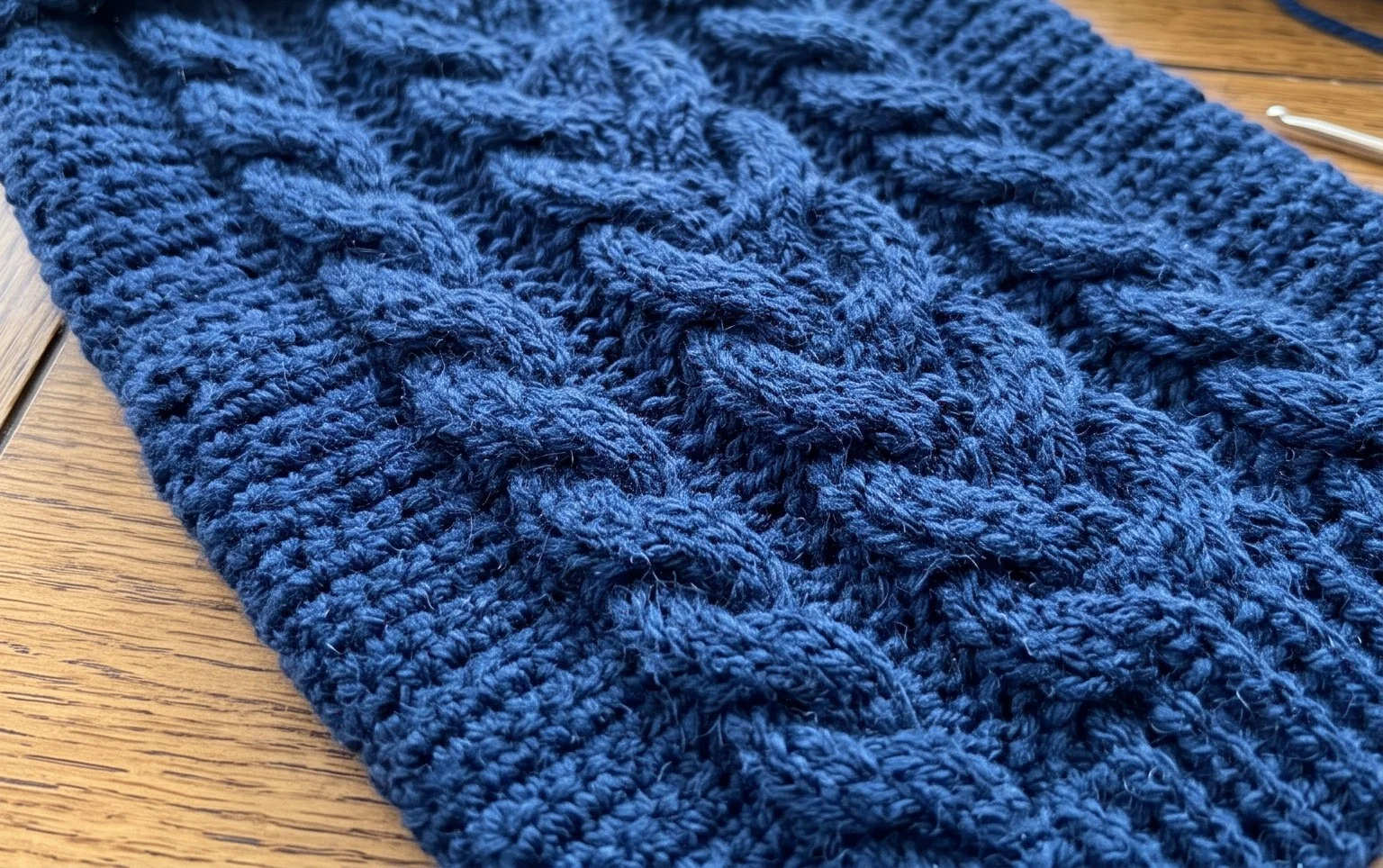
Seeing your pup wearing this handmade garment makes the effort of every cable loop worth it. You can experiment with using a variegated yarn for a playful, multicolored look or adjust the neck ribbing for a longer, cowl-style fit. Sharing your project photos helps others find inspiration for their own pets, so post your finished work online and tag our community. You are always welcome to browse the rest of our pattern library for your next weekend project or seasonal gift idea.