Free Crochet Dishcloth Pattern: Simple Step-by-Step Guide
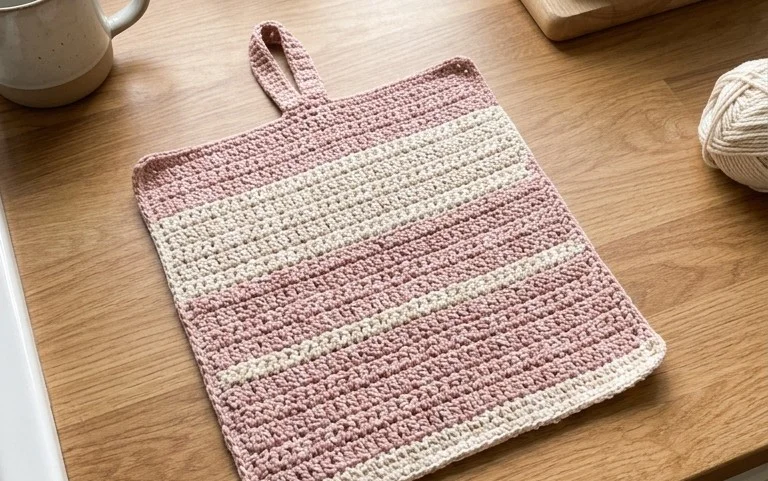
Stiff cotton yarn transforms into a supple, hardworking fabric that fits right into your palm when you follow this guide. This project creates a dense, scrubbable surface that outlasts any flimsy sponge you might pull from a kitchen cabinet. It suits beginners who want a low-pressure way to practice consistent tension and even edges while building useful items for the home. By mastering the linen stitch, you gain a versatile technique for creating durable washcloths or coasters. You will find that making these by hand provides a steady, rhythmic satisfaction that turns an ordinary chore into a quiet moment of focus.
Why You’ll Love This Pattern
This classic crochet dishcloth is designed to withstand daily scrubbing while maintaining a soft, absorbent texture. The linen stitch, also known as the moss stitch, creates a dense fabric that holds soap well and rinses clean easily. Because it uses only basic chains and single crochet stitches, you can finish a cloth in a single afternoon while watching a movie. It is an ideal way to use up cotton yarn remnants from larger projects, as one standard ball of worsted weight cotton is enough for two dishcloths.
I finally learned how to keep my edges straight with this pattern, and it works so much better than the store-bought sponges I used to buy.
— Sarah, home crafter
Pattern Overview & Skill Level
- Skill Level: Beginner
- Approximate Time: 60 to 90 minutes per cloth
- Construction: Worked in flat rows back and forth
- Finished Dimensions: 8 inches by 8 inches
Materials & Supplies Needed
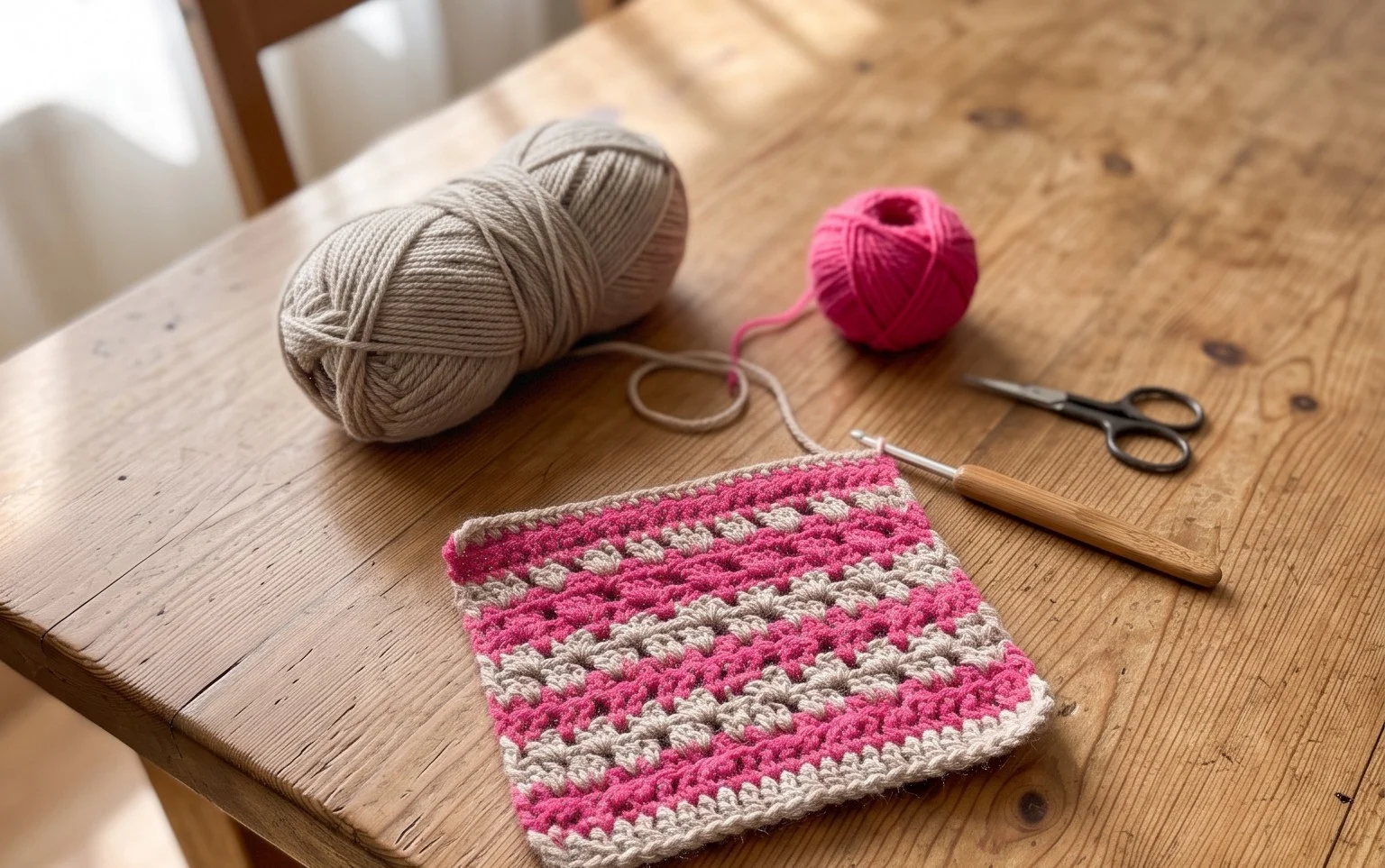
- Yarn: Worsted weight (#4) 100% cotton yarn, approximately 60 yards per dishcloth.
- Hook Size: 5.0 mm (US H-8).
- Notions: Tapestry needle for weaving in ends, scissors.
- Yarn substitutions: Linen or bamboo blends work well, though they may be less absorbent than 100% cotton. Avoid acrylics, as they do not absorb water effectively.
Stitch Guide & Abbreviations (US Terms)
- ch: Chain
- sc: Single crochet
- sk: Skip
- st: Stitch
- Linen Stitch: A sequence of (sc, ch 1, skip next st) that creates a woven appearance.
Step-by-Step Pattern Instructions
Main Body
Start by making a slip knot and placing it on your hook.
- Foundation: Ch 32.
- Row 1: Sc in 4th ch from hook. *Ch 1, sk 1 ch, sc in next ch. Repeat from * across until the end. Turn. (15 sc, 14 ch-1 spaces).
- Row 2: Ch 2 (counts as ch 1), sk first sc, sc in the first ch-1 space. *Ch 1, sk next sc, sc in next ch-1 space. Repeat from * until you reach the turning ch space. Work 1 sc into the turning ch space. Turn. (15 sc, 14 ch-1 spaces).
- Rows 3–30: Repeat Row 2 until the piece measures 8 inches long.
- Finishing: Fasten off, leaving a 6-inch tail. Weave the tail through the stitches to secure it.
Border (Optional)
To give the cloth a polished look, add a simple single crochet border around the perimeter.
- Join yarn in any corner with a sl st.
- Work 2 sc in each corner and 1 sc in the end of each row along the sides, and 1 sc in each st along the top and bottom edges.
- Sl st to the first sc to join. Fasten off and weave in ends.
Care & Washing Instructions
- Machine wash your cotton dishcloths in warm water on a gentle cycle.
- Tumble dry on low heat or lay flat on a drying rack to prevent shrinking.
- Reshape the cloth by pulling the corners gently while damp to ensure it remains square.
Pro Tips & Common Mistakes to Avoid
Maintain consistent tension throughout the project. If your stitches are too tight, the fabric will be stiff and difficult to use; if they are too loose, the cloth will lose its structural integrity after washing.
Use a stitch marker at the beginning of each row to help identify the turning space, which is a common place for beginners to accidentally drop or add stitches.
When weaving in your ends, run the tapestry needle through the base of the stitches on the back side of the fabric for at least an inch to ensure they do not unravel during heavy scrubbing.
If you want to adjust the size, simply increase or decrease your starting chain by an even number. Keep in mind that a larger cloth will require more yardage, so ensure you have enough yarn on hand before beginning.
Frequently Asked Questions
Can I use a different yarn weight for this pattern?
Yes, but you will need to adjust your starting chain length to achieve the desired width. A lighter weight yarn like DK will require more starting chains, while a bulky weight yarn will require fewer.
Why do my edges look wavy or uneven?
Wavy edges are usually caused by tight chains at the beginning of the row or accidentally adding stitches at the end of the row. Counting your stitches at the end of every row ensures the edges remain straight.
Is it okay to sell the dishcloths I make from this pattern?
You are welcome to sell finished items made from this pattern, provided you credit the design. Please do not sell or redistribute the written pattern itself.
How can I make the dishcloth more scrubby?
You can hold two strands of cotton yarn together or use a textured cotton blend that includes polyester or nylon. Do not use 100% synthetic yarns, as they are not heat-resistant and may melt if used on hot cookware.
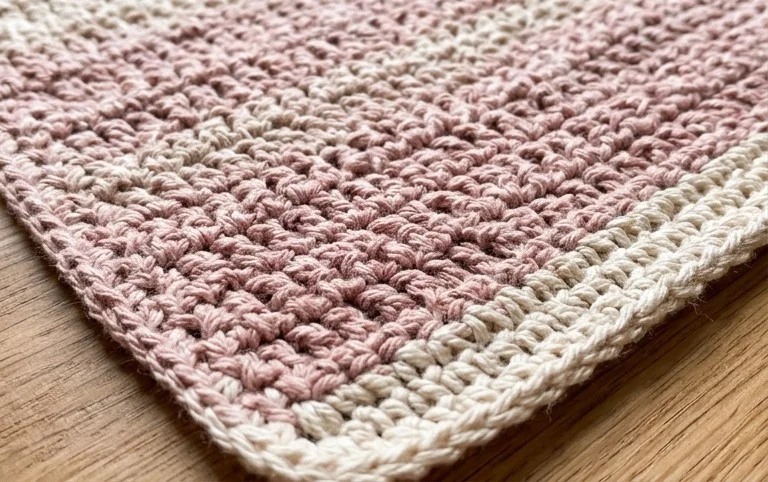
Your finished cloth feels firm yet flexible, ready to tackle stacks of dirty plates or countertops with confidence. You can change the look by striping two different colors of cotton to use up smaller scraps or by adding a simple loop in the corner to hang it from a hook near the sink. Posting a photo of your work helps other makers find inspiration for their own yarn stash. Visit the main blog page to find more textile projects and simple home goods you can create.